
Three Systems,
One Grid Intelligence Platform
PulseOS, PulsePredict, and PulseOpen are the engineering core of PULSE — the operating system, the forecasting engine, and the open platform researchers build on.
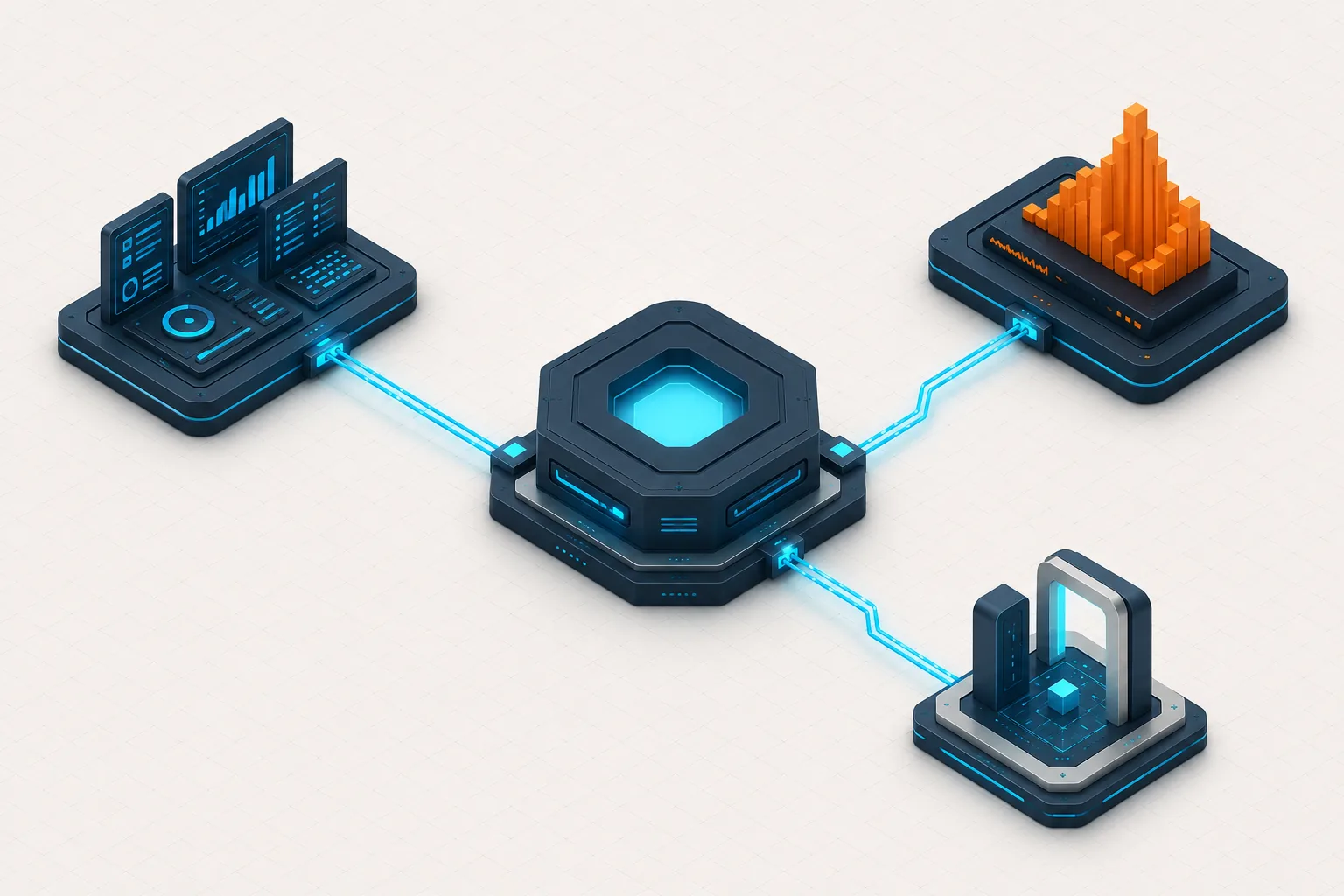
Inside the Three Platforms
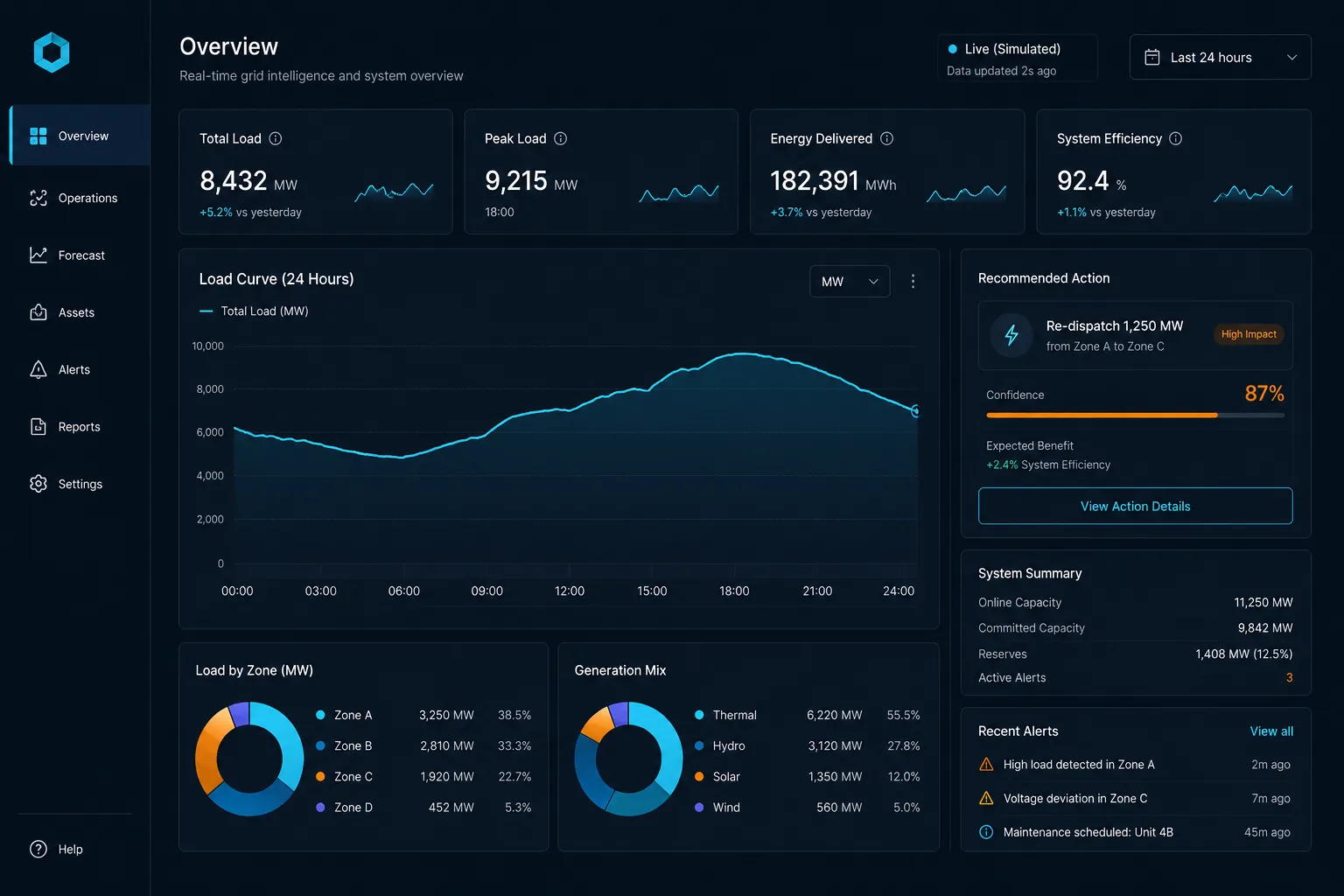
The Window Into Live Grid Data
PulseOS is the user-facing layer of the platform — a FastAPI backend serving grid data from PulseOS's own time-series store, consumed by a React dashboard that makes what's happening on the grid visible and actionable, in real time.
24-hour actual load rendered as a continuously updating chart, polled every 60 seconds — fast enough for a 15-minute data cycle without the overhead of a persistent connection.
A always-visible indicator showing whether the dashboard is reading live grid data or falling back to the production simulator, so operators always know what they're looking at.
Surfaces a warning the moment anomalies appear in the last 24 hours of readings, before they can be mistaken for real load behavior.
Translates PulsePredict's forecast into an action type, timing, magnitude, and confidence score an operator can act on directly.
A dedicated alert surfaces immediately if a forecast trips a physical constraint, so nothing physically impossible ever reaches an operator quietly.
“If you enforce physics in the prediction loop, the model cannot produce an output that breaks the laws of the grid. That's the whole bet — a forecast operators can trust is a forecast operators will actually act on.”
Kelvin Godwin Anaman
Founder & CEO of PULSE

Learn More About the Platform
A model trained purely on historical patterns can be statistically confident and still physically wrong — predicting a ramp rate no generator can hit, or a load below what a grid can ever drop to. PulsePredict enforces capacity and ramp-rate limits directly, both as a training penalty and as a hard post-processing clip, so a forecast can never claim something the grid cannot physically do.
GridEnv is PulseOpen's reinforcement-learning environment for grid optimization problems, built to the same reset() / step() / render() interface as OpenAI Gym / Farama Gymnasium. Any researcher who has worked with a standard RL environment can start building grid-AI agents immediately, without learning a new API.
No. PulseOS is a window into the data and the forecast, not a control system. It's designed to sit alongside the tools operators already use, surfacing live load, data quality, and recommended actions rather than replacing the systems that actually operate the grid.
End to end — from raw grid data to a physics-constrained 24-hour forecast — the pipeline is built to run in under 60 seconds with zero manual intervention.
Yes. PulseOpen is installable directly from PyPI with no account or proprietary tooling required. Open access is intentional — it's what makes community adoption and independent research on the platform possible.
Build With Us. PulseOpen is live on PyPI — start with GridEnv, or talk to our team about PulseOS and PulsePredict.
pip install pulseopen

from pulseopen import GridEnv
env = GridEnv(scenario="peak_demand")